Wednesday, 26 August 2015

Henry Frederick Stuart, Prince of Wales, A terracotta bust from Queen Caroline's Library, Destroyed in 1906.


Henry Frederick Stuart, Prince of Wales (1594 - 1612).

One of The Seven Terracotta Busts by Michael Rysbrack,
Accidently Destroyed when a Shelf Collapsed
at Windsor Castle in 1906.
 
The Original Photographs were taken by Livingstone in 1874 for a royal inventory.

The busts had been moved to Windsor Castle in 1825 when Queen Caroline’s library at St James’s Palace was demolished.  
 
 
Henry, Prince of Wales shown wearing the order of the garter.
 
First child of James VI of Scotland ( James I of England) and Anne of Denmark. Older brother of Charles I.
 
Royal Collection Trust / © HM Queen Elizabeth II, 2015.
 
___________________________________________
 
 
Henry, Prince of Wales.
Wearing the order of the Garter.
 
Watercolour, Vellum on card, 13.2 x 10cms to frame.
 

Royal Collection Trust / © HM Queen Elizabeth II, 2015.


There are many versions of this portrait including several in the Royal collection - this is the largest.
 
This portrait was probably commissioned by Henry, Prince of Wales; Charles I, by c.1639; Charles II; left the Royal Collection some time during the early eighteenth century; unknown sale, April 1751; where bought by James West; Rundell, Bridge & Rundell; from whom acquired by George IV, 7 August 1807; left the Royal Collection again at an uncertain date; recovered by Sir John Cowell (Master of the Household) from a cottage near Windsor, 1863.
 
 
Royal Collection Trust / © HM Queen Elizabeth II, 2015.
 
_____________________________________________________________
 
Isaac Oliver
Watercolour on vellum 7.7 x 5.6 cm
 
This miniature is one of many signed, reduced versions in existence; some may have been completed during the Prince’s lifetime, but many are likely to have been produced posthumously.
 
George Vertue recorded the present miniature ‘amongst Dr. Meads limnings one very curious of P. Henry. eldest son of K.J. first’.28 In 1738, it was engraved in reverse while still in Dr Mead’s collection by Jacob Houbraken for Thomas Birch’s Heads of Illustrious Persons of Great Britain (1743), and soon afterwards it was purchased by Frederick, Prince of Wales, for his collection of miniatures.
 
Provenance Dr Richard Mead (1673-1754), purchased by Frederick, Prince of Wales between 1745 and 1751.
 
 
______________________________________________


Commemorative Medallion of Henry Prince of Wales
attributed to Charles Anthony of the Royal Mint c.1612.
29 mm diam.
 
Copyright © 2015 P&D Medallions
___________________________________________________________


Engraving of Henry Prince of Wales after Isaac Oliver
by Robert White (1645 - 1703). 
154 x 100 cms. c. 1684 -1700.
 
British Museum
 
_________________________________________


Henry Prince of Wales.
Engraved by George Vertue (1684 - 1756) after an original by Isaac Oliver in the collection of Richard Meade MD.
 
30 x 19.4 cms platemark.
 
Royal Collection Trust / © HM Queen Elizabeth II, 2015.
 
___________________________________________________


Engraving of Henry Prince of Wales
 Jacobus  Houbraken (1698 - 1780), after the original by Isaac Oliver
in the collection of Richard Meade MD.
From Birch's Heads.
 
372 mm x 231 mm. 1738.
 
NPG.
 
____________________________________________
 
 
Henry, Prince of Wales
11.1 x 8.4cms
 
Engraving by van de Passe
A plate from Crispin van de Passe's Regiae Anglicae Majestatis pictura, et historica declaratio (1604).
 
It might be a coincidence but the collar on this engraving is close to that on the Rysbrack bust. This leads me to believe that Rysbrack's portrait was a conflation of this engraving and the laste 17th century engraving by Robert White above.


Henry Prince of Wales by van Dyck.
 
Oil on canvas - 215.8 x 120.4 cms.
 
Royal Collection Trust / © HM Queen Elizabeth II, 2015.
 
This portrait was painted by Van Dyck during his second visit to London twenty years after the Prince's death, presumably to form part of Charles I's royal family portrait gallery in the Cross Gallery at Somerset House.
 
The artist based the head on a large miniature by Isaac Oliver in the collection of Charles I. He dressed him in a famous armour for field and tilt made at Greenwich by William Pickering c. 1610 decorated with the emblems of the Union of the Crowns (RCIN 72831). Both these sources, the miniature and armour are still in the Royal Collection. (see image below).


Royal Collection Trust / © HM Queen Elizabeth II, 2015.


Queen Phillipa or Catherine Parr ( not positivelyidentified) Terracotta bust from Queen Carolines Library , Destroyed in 1906.


Unidentified Terracotta Bust
Queen Philippa or Katherine Parr.

Attribution suggested by the Keepers of the Royal Collection.
Webb, Country Life, 1954 suggests Kathererine Parr.
 
One of The Seven Terracotta Busts by Michael Rysbrack,
From Queen Caroline's Library 
Accidently Destroyed when a Shelf Collapsed
at Windsor Castle in 1906.
 
The Original Photographs were taken by Livingstone in 1874 for a royal inventory.

The busts had been moved to Windsor Castle in 1825 when Queen Caroline’s library at St James’s Palace was demolished.  


Royal Collection Trust / © HM Queen Elizabeth II, 2015.
 
For images of Katherine Parr see - https://www.pinterest.com/tudorqueen6/kateryn-parr/
 
For an excellent website devoted to Katherine Parr see - http://tudorqueen6.com/


Tuesday, 25 August 2015

The Eleven Terracotta busts by Rysbrack from Queen Caroline's Library accidently destroyed in 1906 and the Four Surviving busts.


The Group of Seven Terracotta Busts by Michael Rysbrack,
Accidently Destroyed when a Shelf Collapsed at Windsor Castle in 1906 and the Four surviving Busts still in the Royal Collection.
 
Photographs taken by Livingstone in 1874 for a royal inventory.

The busts had been moved to Windsor Castle in 1825 when Queen Caroline’s library at St James’s Palace was demolished.          


Terracotta bust by Michael Rysbrack

Queen Phillipa (?).
Destroyed by accident 1906.
 
Royal Collection Trust / © HM Queen Elizabeth II, 2015.
 
__________________________________________
 
 
Terracotta bust by Michael Rysbrack.
Henry Frederick Stuart Prince of Wales (1594 - 1612).
Destroyed by accident 1906.
 
Royal Collection Trust / © HM Queen Elizabeth II, 2015.
 
_________________________________________
 
 
Terracotta Bust by Michael Rysbrack
Henry VII (1457 - 1509).
Destroyed by accident 1906.
 
Royal Collection Trust / © HM Queen Elizabeth II, 2015.
 
______________________________________
 
 
Terracotta bust by Michael Rysbrack
Henry V (1386 - 1422).
Destroyed by accident 1906.
 
Royal Collection Trust / © HM Queen Elizabeth II, 2015.
 
_____________________________
 
 
Terracotta bust by Michael Rysbrack
Elizabeth of York (1466 -1503), consort of Henry VII.
65.3 x 35.0 x 23.0 cm
Damaged by accident 1906 but not destroyed - It remains in the Royal Collection.
 
Royal Collection Trust / © HM Queen Elizabeth II, 2015.
 
_____________________________
 
 
Alfred the Great (849 - 899).
Destroyed by accident 1906.
This bust had been wrongly identified as Edward III
 
Royal Collection Trust / © HM Queen Elizabeth II, 2015.
 
_________________________________
 
 
Terracotta bust by Michael Rysbrack.
Queen Phillipa of Hainault (1314 - 1369). Wife of Edward III.
Destroyed by accident 1906.
 
Royal Collection Trust / © HM Queen Elizabeth II, 2015.
 
_________________________________


Terracotta bust by Michael Rysbrack
 Edward III. (1312 - 1377).
Destroyed by accident 1906.
 
Royal Collection Trust / © HM Queen Elizabeth II, 2015.
 
I am very grateful to Agata Rutkowska of the Royal Collections for providing me with these images.


Garter Ante Room, Windsor Castle, c. 1890. with the bust of Phillipa of Hainault by Rysbrack. 
 Royal Collection Trust / © HM Queen Elizabeth II, 2015.
 
 
Terracotta Bust by Michael Rysbrack
Edward the Black Prince.
64.5 x 51.0 x 25.0 cm
Royal Collection Trust / © HM Queen Elizabeth II, 2015.
 
Edward is thought to have taken this name after the black colour of his armour and although he died before he could succeed his father to the throne he secured his son's ascension, who later became Richard II.
 
 
Terracotta Bust by Michael Rysbrack
Edward VI (1537 -53).
son of Henry VIII and Queen Jane Seymour
Signed and dated 'Mich Rysbrack 1738'
This is the only bust extant which is signed and dated.
56.5 x 47.0 x 33.0 cm (whole object).
 
Royal Collection Trust / © HM Queen Elizabeth II, 2015.
 
 
Terracotta bust by Michael Rysbrack.
Elizabeth I. (1533 - 1603).
65.5 x 45.5 x 29.0 cm
 
Royal Collection Trust / © HM Queen Elizabeth II, 2015.
 
In 1736, Queen Caroline, King George II’s consort, commissioned John Michael Rysbrack, a Flemish sculptor working in England, to create a series of terracotta busts of English sovereigns, of ‘all Kings of England from William the Conqueror’. In the early 18th century, a new fashion for representations and images of prominent historic figures or 'British Worthies' arose in England. With the arrival of a new protestant dynasty in 1714 there was a need to create a strong national identity. As well as a patron of the Arts, Queen Caroline was an influential political and intellectual figure of her time and with this commission she sought to establish direct links between the new Hanoverian protestant dynasty and England’s royal ancestry and historic past.

George Vertue recorded a visit by Queen Caroline on 10 June 1735 to Rysbrack’s studio, where she was able to see ‘the Busts of Marble of Kings & Queens done lately by him to adorn some palace’. An article in the Gentleman’s Magazine a few weeks later noted that ‘Her Majesty has ordered Mr Risbrack to make the Bustos in Marble of all the Kings of England from William the Conqueror, in order to be placed in her New Building in the Gardens at Richmond’. Important as these early sources are, neither is completely accurate, for the series does not seem to have reached the marble stage, and there is no other contemporary reference to a series of kings at Richmond. These terracottas were in fact modelled for Queen Caroline’s Library at St James’s Palace.

Whilst it may have been intended that the busts should then be carved in marble, the commission was annulled by the Queen’s death in November 1737. On 23 January 1738 Isaac Ware as Secretary of the Board of Works wrote to Rysbrack: ‘I am ordered … to acquaint You that [the Commissioners of Works] will Allow you the Price you have Charged them for the Busto’s in the Queens Library, but expect you will send them to the Office (there to be Lodged) the Models of the faces you made for Working after’. It seems that the terracottas themselves were displayed in the Library. The others in the series represented Alfred; Edward III; Philippa of Hainault; Edward, Prince of Wales, the Black Prince, Henry V; Catherine of Valois; Henry VII; Elizabeth of York; Elizabeth I, and Henry Stuart, Prince of Wales. Of the eleven terracotta sculptures that Rysbrack made only three survive: one of Edward the Black Prince (RCIN37067), another of Queen Elizabeth I (RCIN 45101) and this one of Edward VI. The other busts were destroyed in 1906 when the shelf on which they stood at the Orangery in Windsor Castle collapsed. The busts had been moved to Windsor Castle in 1825 when Queen Caroline’s library at St James’s was demolished.

Text adapted from The First Georgians; Art and Monarchy 1714 - 1760, London, 2014
          

Monday, 24 August 2015

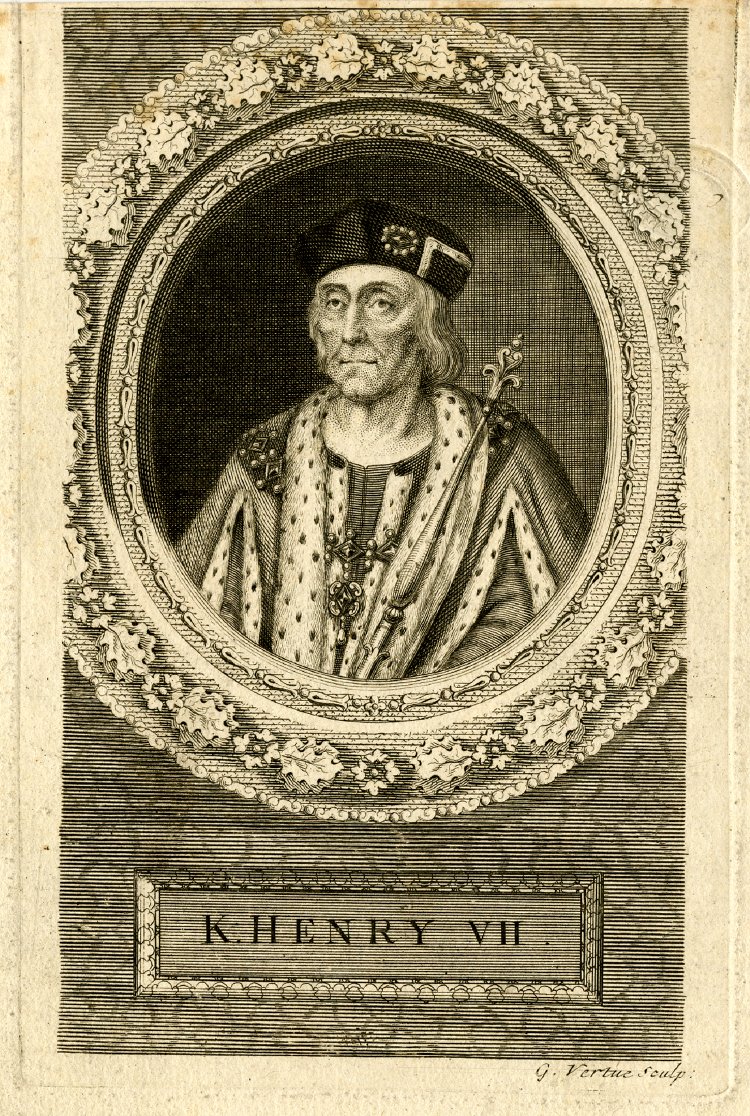
George Vertue Illustrations from Paul Rapin - Thoyras (1661 - 1725)

Illustrations Kings and Queens of England
Engraved by George Vertue 
for Paul Rapin - Thoyras and Nicolas Tindal's
"History of England" (1745).


Rapin - Thoyras was the author of a 'History of England', which was published by the Knapton brothers with enormous success in the 1730s, both in the original French and in English translation. Illustrations were commissioned for it from George Vertue. Translated by Nicolas Tindall (1687 - 1774).
 
All images 162 x 91 mm approx.
 
 
British Museum.


British Museum
 
 
British Museum


NPG.


British Museum
 
 
British Museum


NPG.


NPG.


British Museum.


British Museum.


NPG.
 
 
NPG.
 
 
British Museum


NPG
 
 
NPG.


NPG.


Tuesday, 18 August 2015

Thomas Salmon's 'Chronological Historian,' published by W. Mears, London in 1723. Engravings by George Vertue.

 
Thomas Salmon's 'Chronological Historian,' published by W. Mears at London in 1723.
Engravings by George Vertue.
 
London : printed for W. Mears, at the Lamb, without Temple-Bar, MDCCXXIII 1723.
 
The Chronological Historian : containing a regular account of all material transactions and occurrences, ecclesiastical, civil, and military, relating to the English affairs, from the invasion of the Romans, to the present time. With the Creations and Promotions of the Nobility and Baronets, Ministers of State, Generals, Judges, Attorneys, and Solicitors-General, as they stand in Order of Time; whereby that Confusion, which generally misleads the Reader in the Perusal of our Historians for want of at exact Chronology, is prevented, and other Defects and Omission supply'd. By Mr. Salmon. Ilustrated with the effiges of all our English monarchs, curiously engraven from Original Paintings, by Mr. Vertue.


 Plate I
 
 
Plate II.
 
 
 Plate III.
 
 
Plate IV.
 
Size of each plate approx. 157 x 91 mm.
 
Images from the British Museum.