Wednesday, 18 July 2018

Bust of Robert Freind by Rysbrack Christ Church College, Oxford.


Bust of Robert Freind (1667 - 1751).

Michael Rysbrack.

indistinctly dated 1738.

Christ Church College, Oxford.

Some notes.

Once again grateful thanks to Dana Josephson

George Vertue notes a bust of John Friend pre 1732 (Vertue III).


Robert Freind, was the eldest son of the Rev. William Freind (also Friend), rector of Croughton, Northamptonshire, was born there, and at an early age was sent to Westminster School, where he was admitted on the foundation in 1680. He obtained his election to Christ Church, Oxford, in 1686, and graduated B.A. 1690, M.A. 1693, and B.D. and D.D. 1709. 

Freind served the office of proctor in 1698, and in the following year was appointed under-master of Westminster School in the place of Michael Maittaire. In 1711 he succeeded Thomas Knipe as the head-master, and in the same year was presented to the rectory of Witney in Oxfordshire.

Freind was appointed a canon of Windsor by letters patent dated 29 April 1729, and was installed a prebendary of Westminster Abbey on 8 May 1731. On his retirement from the head-mastership in 1733 he was succeeded by John Nicoll, who had served nearly twenty years as the under-master of the school. On 26 March 1739 Freind resigned the living of Witney, which, through the influence of the Queen and Lady Sundon, he had succeeded in making over to his son. In March 1737 he was appointed canon of Christ Church, but he resigned his stall at Westminster in favour of his son in 1744.

Freind died on 7 August 1751, aged 84, and was buried in the chancel of Witney Church.  A portrait of Freind was also preserved along with the portraits of the other headmasters at Westminster School.

Freind was a successful schoolmaster; his circle included Francis Atterbury. Matthew Prior and Jonathan Swift. With Atterbury and other old Westminster boys he helped in the production of Charles Boyle's attack on Richard Bentley. Freind's niece, however, married a son of Bentley.

Information here mostly culled from Dictionary of National Biography


.............................


Robert Freind (1667 - 1751).

Michael Dahl (c. 1656 - 1743).

Oil on Canvas.

74.9 x 62.2 cms

Christ Church College, Oxford

Image from Art UK

https://artuk.org/discover/artworks/robert-freind-16671751-229092


Michael Dahl - Robert Freind


Robert Freind

Christ Church College.
Aquired by the cllege between 1766 and 1770 when it hung in the Hall


Image from - https://uart.com/artwork/michael-dahl-robert-freind


_______________________________________


John Freind bother of Robert Freind.


Physician to George II and Queen Caroline.


John Freind died three months after he had led the opposition to Dr Fullerton's degree and his will revealed his continuing interest in Oxford. He directed that if his son should die without any children, £1,000 should be applied to the building of an anatomy school at Christ Church and to the salary of the reader, and if his brother's two sons should leave no children, his whole estate should be expended towards the building of a hospital in Oxford. Dr Freind's son died unmarried in 1750 and the bequest, augmented by some £10,000 by Dr Matthew Lee, went to Christ Church; however the reversionary proposals were not implemented. Nonetheless, after Bellers' general proposal in 1714, this is the first serious suggestion for an Oxford hospital.


John Freind


Monument to John Friend brother of Robert Friend 1730 - 31.

Michael Rysbrack.

Note the snakes on the volutes either side of the bust.

The usual poor quality photograph from the Westminster Abbey website.

The Abbey authorities refuse permission for any photography within the Abbey.

I could purchase an expensive higher resolution photograph from them but I have no intention of doing so.

The inscription was written by his brother Robert, who was Head Master of Westminster School and a clergyman at the Abbey. 
The architect was James Gibbs and the sculptor Michael Rysbrack and the monument was put up by the doctor's son. 

The Latin inscription can be translated:


 John Freind, M.D.


Chief physician to her serene Majesty Queen Caroline: by her clear judgment once approved, he flourished with as much grace among the Royal Family, as he had before enjoyed medical fame with the world. His character was benevolent and most liberal: attached to social intercourse and most tenacious of friendship, however its duties might in any way involve him in danger; no man conveyed with greater alacrity a benefit to others, or more freely remembered one conferred upon himself. While yet a youth he began to attract celebrity by his writings, and, polishing his style by a sedulous familiarity with the Latin as well as his native tongue, he brought forward, as a senator, in bright maturity, the elocution he had long cultivated in private. At home he signally devoted his studies to polite letters, but applied his principal strength with honourable propriety, to become the most skilful in his art - with what success, the public and nobility of Great Britain, with what varied knowledge, the learned of all nations, with what indefatigable applications and industry, his friends in tears commemorate. It was surprising that, amidst such a circle of continual occupation, he found leisure for writing, but that he was no longer able to bear so great a weight is by no means strange. He died, flourishing in age, while spending his fifty second year, July 26 1728".
On the base:

"Member of Westminster School and Christ Church, Oxford, and the College of Physicians; Fellow of the Royal Society"
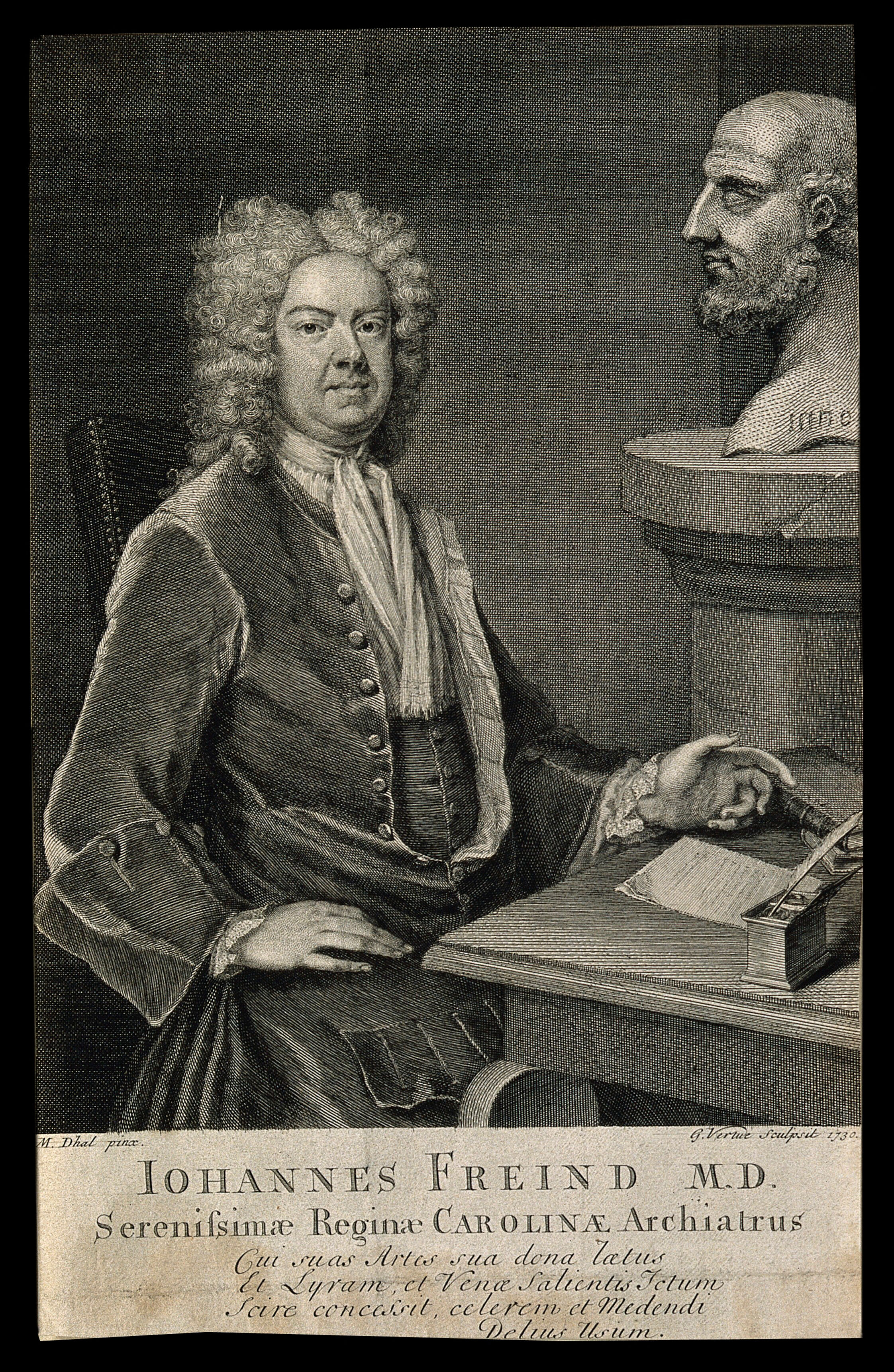


 John Freind.

George Vertue

Engraving after Michael Dahl.

Image courtesy Wellcome Library.


Monday, 16 July 2018

The Busts of Richard Frewen by Roubiliac in the Christchurch and Bodleian Libraries, Oxford


The Two Marble Busts of Dr Richard Frewen ( 1681? - 1761).
sometimes spelled Frewin.

by Louis Francois Roubiliac.

in Christ Church Library and the Bodleian Library, Oxford.


Continuing the series of posts on Portrait Sculpture at Oxford University initially suggested to me by Dana Josephson.

Once again I must express my sincere thanks to him for making this work possible.


These two remarkable busts display the honest depiction of the 80 year old, near toothless Richard Frewen in old age. They should be compared with several other busts of medical men in their later years by Roubiliac including those of Richard Meade RS. (Marble in the Royal College of Physicians), William Cheselden R.S.and John Belchier RS. (Plaster in the Royal College of Surgeons) and the polymath Martin Folkes RS.(plaster British Museum, Marble at Wilton House).

For Meade see my blog post - - https://english18thcenturyportraitsculpture.blogspot.com/2016/09/bust-of-richard-meade-by-roubiliac.html

For BCheselden and Belchier see my blog post -
http://english18thcenturyportraitsculpture.blogspot.com/2016/03/cheselden-and-belchier-royal-college-of.html

__________________________________

In the Roubiliac Sale of 12 may 1762 and the following three days
Day 1,
Lot 2, Dr Frewin of Oxford (plaster).

Lot 8, Dr Frewin of Oxford (plaster).

Day 2.
Lot 6, Dr Frewin of Oxford (plaster).

Lot 54 Dr Frewen (mould in plaster).
Day 4.
Lot 58 Dr Frewins Head (mould in plaster).

Given the nature of the material it is quite possible that none of the three plaster busts have survived, but one can live in hope! 
There is no mention of the original terracotta but it is most likely that these plaster busts would have been moulded from an original terracotta.

_______________________________________


For the excellent biog. of Frewen  available on line see The Life and Times of Dr Richard Frewen, Medicine in Oxford in the 18th Century by AHT Robb - Smith ed Margaret Pelling, 1972.

The 15th  Gideon de Laune lecture, given by Dr A. H. T.
Robb-Smith to the Worshipful Society of Apothecaries of London on 19 April 1972.


The son of Ralph Frewen. In 1693 Frewen entered Westminster School, whose headmaster was the famous advocate of corporal punishment Dr Richard Busby - the marble bust of Busby by Rysbrack is in the hallway at Christ Church College Library - there is another plaster version at Westminster School (photographs of the busby bust will appear shortly on this blog. Frewin went up to Christ Church College, Oxford University where he achieved his M.A. in 1704 and his M.D. in 1711.  


In 1708 he is described at the foot of a Latin poem which he contributed to 'Exequiæ Georgio principi Danise ab Oxoniensi academia solutæ' (Oxford, 1708) as professor of chemistry; he was also in 1711 rhetoric reader in Christ Church. 

As a physician he had an excellent reputation; he attended Dean Aldrich on his deathbed. John Freind's 'Hippocrates de Morbis Popularibus' is dedicated to him, and contains a letter from him (dated Christ Church, 20 July 1710), giving an account of a case of variolæ cohærentes which he had been attending. 

In 1727 he was unanimously elected to the Camden Professorship of Ancient History, no other candidate having put their name forward. 

Hearne relates that soon after his election he bought a hundred pounds' worth of books on history and chronology, 'on purpose to qualify him the better to discharge' the duties of the office. 

He died 29 May 1761, having survived his children, who died young, and three wives, Lady Tyrell (widow of Thomas Tyrrell), Elizabeth Woodward, and Mrs. Graves, daughter of Peter Cranke. 

He bequeathed £2,000 in trust for the king's scholars of Westminster elected to Christ Church, and another £2,000 in trust for the physicians of the Radcliffe Infirmary, and bequeathed his house in Oxford, now known as Frewin Hall, (now part of Brasenose College) to the Regius Professor of Medicine for the time being. 

His library of history and literature, consisting of 2,300 volumes, he left to the Radcliffe Library.

Much info above culled from Dictionary of National Biography.


______________________________________


The Bodleian Library, Oxford Marble Bust of Richard Frewen.

Inscribed on the left hand side (proper) of the side of the base L.F. Roubiliac Sc.t ad vivum MDCCLVII and on the right hand side RICHARDUS FREWIN M.D. Aetat 80.
.


____________________________________


The Christ Church College, Oxford Marble Bust 
of Richard Frewen M.D..


Presented by Dr Hawley in 1757.

At some time in the past this bust has been painted - probably in order to hide the damage sustained in a previous accident. There is evidence of the use of what looks like a plaster of Paris filler on the lower left hand (proper) front of the dress.


The back of the Christ Curch bust of Frewen.

showing the inscription.

RICHARDUS FREWIN.

Aetat 80.


The break on the back of the base is obvious in this photographed.


The left side (proper) of the dress showing the plaster type filler used to disguise the break.

Photograph provided by Dana Josephson.

____________________________________


________________________________________


Very low resolution photograph of the Mineral Water Hospital portrait of Dr Frewen?
from Bath in Time website.

https://bathintime.co.uk/image-library/image-overview/poster/14027/posterid/14027.html

Copyright Bath in Time.

Originally the photographic collection of Bath City Archives - now the cash cow for the proprietor.


The website purposely publishes very low resolution photographs which are of very little use to the serious researcher  - the cheapest reproduction available of their photographs is £20.

Both the proprietor and Bath and North East Somerset should be ashamed of themselves.

______________________________


Dr Richard Frewen (c. 1677 - 1761).

Michael Dahl

Christchurch College

Oil on canvas.

76.2 cms x 63.5 cms.

Image from Art UK.


John Freind's 'Hippocrates de Morbis Popularibus' is dedicated to him, and contains a letter from him (dated Christ Church, 20 July 1710), giving an account of a case of variolæ cohærentes which he had been attending.


Friday, 13 July 2018

Bust of Dr Matthew Lee by Roubiliac.


Dr Matthew Lee (1694 - 1755).
The Marble Bust.
by Louis Francois Roubiliac.

Presumably c. 1755.

Updated 8 August 2023 with the information and photographs of Dr John Belchier.


This is the first published essay on the subject of this bust - peculiarly it is not recorded in the Dictionary of Sculptors in Britain .. Roscoe et al, pub Yale 2009.

Mrs Esdaile states in Roubiliac, Oxford 1928 says 'placed on a bracket below the gallery of the college Laboratory... is thickly covered in paint which effectually prevents the search for a signature'.

Currently at the foot of the staircase in the Lee Building, the former Anatomy School, Christ Church College, Oxford now the Senior Common Room.

Placed in the building in 1758 (info from A Christchurch Miscellany, Hiscock, 1946).

This bust went unnoticed by Mrs Poole until she was alerted to it by Mrs Katherine Arundell Esdaile
see page 317, Catalogue of Portraits Oxford... Vol III, Mrs Reginald Lane Poole 1925.

Noted in the lecture room in 1925, now in the hallway on the ground floor.

Mrs Poole says the bust was painted but I am informed there is no obvious evidence.

The bust is very dirty and could do with a gentle wash.

A few unedited notes on Dr Lee.


Matthew Lee born in Northamptonshire matriculated in 1713 and studied medicine, graduating BA (1717), MA (1720), BM (1722) and DM (1726). He showed marked affection for the House, and the Chapter leased to him the lucrative tithes of the Rectory of Chippenham, which  no doubt secured his material comfort, since the tithes were additional to the income from his rewarding and extensive medical practices. 

Candidate for the Royal College of Physicians on 12 April 1731, became a Fellow on 3 April 1732

Having married a young lady from London in 1730, he moved to the capital, where he practised even more successfully. Lee does not at this stage appear to have had great interest in the scientific aspects of the profession; his contribution was to come later, in his will. 

Matthew Lee was a Westminster School and Christ Church physician, who graduated MB in 1722, delivered the Bodleian oration in 1723, and received his DM in 1726. 

He lived in part of Frewin's house in New Inn Hall Street, so probably gained his clinical practice with him. However, when James Keill died in 1719, he left Lee his microscope and all his medical books, and as Lee was a Northampton man, he may have studied with Keill as well. 

Dr Lee moved to London in 1730, became a fellow of the College of Physicians and Harveian orator, and succeeded Noel Broxholme as physician to Frederick Prince of Wales, but neither he nor Sir Edward Wilmot recognised the gravity of the Prince's fatal illness. Prince Frederick died in 1751 from an infected cyst possibly initiated two years previously by a blow from a cricket ball.

It is thought that the creation of the Anatomy Laboratory had originally been suggested by John Freind, physician to Queen Caroline, who gave a course in Chemistry in 1704.  His will directed that, if his son should die without children, £1000 would be given for the building of an Anatomy School at Christ Church and for the salary of a Reader in the subject. It is not clear what happened to this benefaction but the son died unmarried in 1750 and it is probable that the bequest was indeed made to Christ Church, since 1750 is the commonly quoted date of the foundation of the Matthew Lee Readership (the Freind bequest would in any case have been inadequate for the purpose intended).

This bequest was later augmented by some £10,000 by Matthew Lee.

Matthew Lee died in 1755 and left the bulk of his estate (over £20,000) to Christ Church for the advancement of Westminster students and for the endowment of a Readership in Anatomy. 

 Nevertheless, there were strict conditions: the holder of the post was to have been educated at Westminster, to hold the degree of MA having studied physick, to be a layman, to reside in Oxford for at least six months annually, to instruct only in Anatomy, Physick and Botany, and to dissect two bodies each year (for which the Trust provided an additional £40 per annum as running costs). The dissections were public spectacles: the Dean could nominate four Students and two Commoners to attend without charge, all others being required to pay a fee.


Dr Lee's  Readership of Anatomy was established in 1767 at Christ Church College, Oxford.


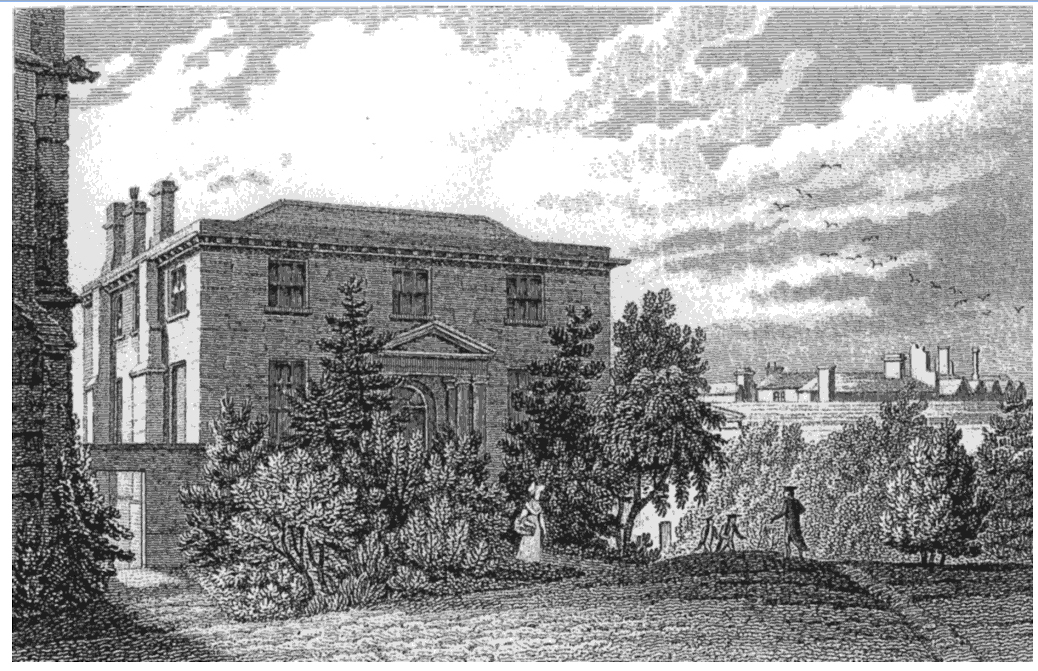
The Christ Church College, Oxford Anatomy School
in the Precincts of Christchurch College, Oxford.

Woodcut from
Memorials of Oxford  by James Ingram. 
The engravings by John Le Keux, from drawings by F. Mackenzie
Ingram, J. (James), 1774-1850.
J. H. Parker, H. Slatter, & W. Graham,  1837.

Image Courtesy Wellcome Library.

______________________________________


Anatomy School at Christchurch, Oxford.

Engraving from the University and City of Oxford, Displayed in a Series of 72 Plates, 

J and HS Storer, pub.  London 1821.
.............................


An early to mid 19th century view of the Lee Building, unknown source.


______________________________________

Dr Matthew Lee.

Marble bust.

Roubiliac.


The source of these photographs (taken in very poor light) wishes to remain anonymous.

It should be noted that neither Curator? Kevin McGerty or the members of the Committee of the Senior Common Room have been of any assistance in the compilation of this page. Thank you for nothing.

............................

A very interesting aspect of this Roubiliac bust is that he uses the same details of the open fronted shirt on this bust as on the the bust of John Belchier in the Royal College of Surgeons. but on this bust he adds a toga or cloak onto his left hand side proper shoulder


Most of the information on this page taken from -


See also - 

THE LIFE AND TIMES OF DR RICHARD FREWIN (1681-1761): MEDICINE IN OXFORD IN THE EIGHTEENTH CENTURY A. H. T. Robb-Smith ed. Margaret Pelling an edited version of the fifteenth Gideon de Laune lecture, given by Dr A. H. T. Robb-Smith to the Worshipful Society of Apothecaries of London on 19 April 1972


__________________________________________

From the Roll of the Royal College of Physicians London (1701 - 1800) 2nd Edition, 1878.


John Freind (1675–1728)


The Portrait of Dr Robert Freind (1675 - 1728).
with bust of Galen the Greek physician?
by Michael Dahl (1659/9 - 1743)

given by Dr Matthew Lee to Christ Church College Oxford.

There are two further versions of this portrait at The Royal College of Physicians.