Update 7 March 2024.
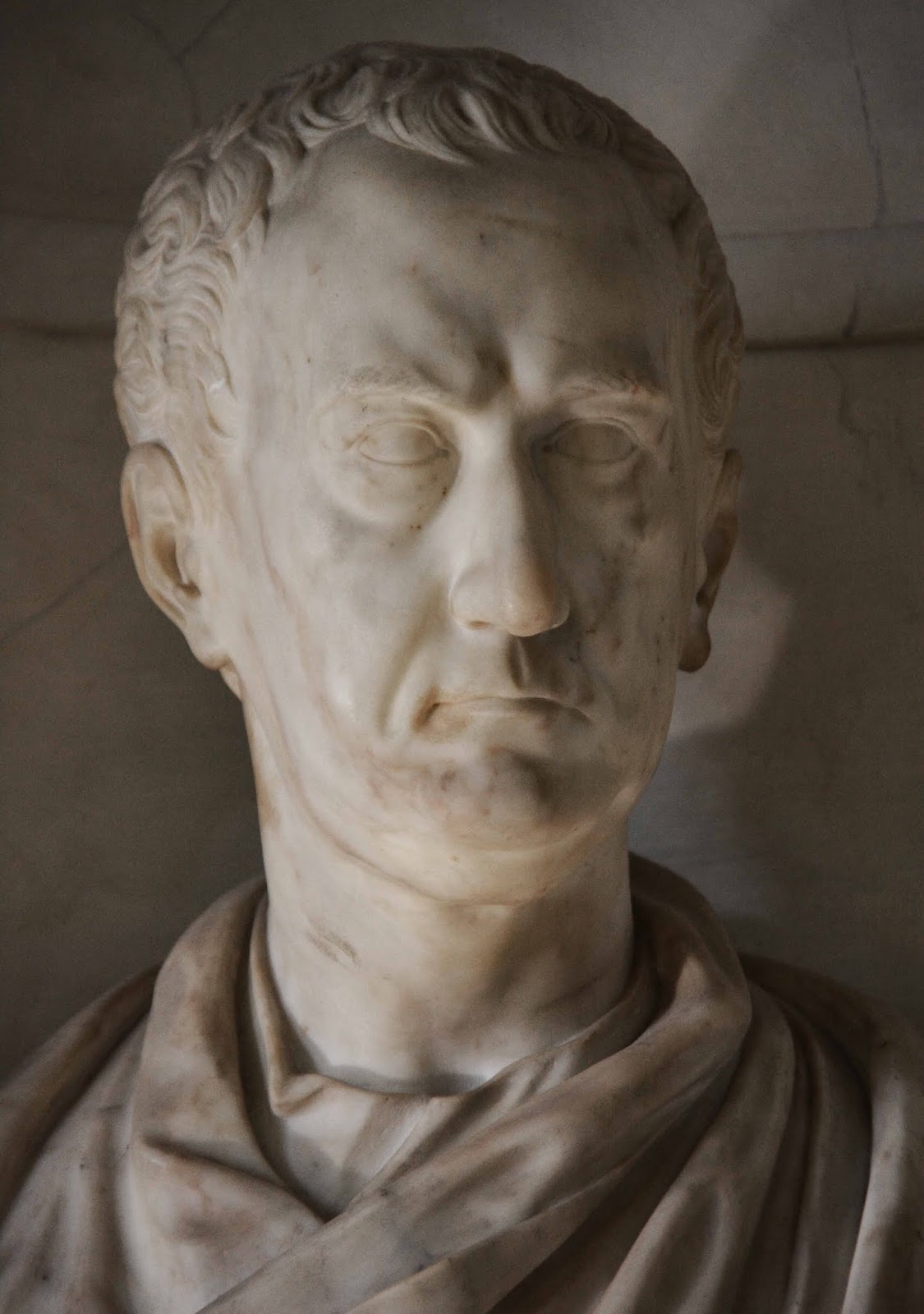
The marble bust of Gratiana Davenport is no longer at Lacock Abbey and is currently, March 2024 being offered for sale by London Sculpture Dealer Stuart Lochead at the Maastricht TEFAF Fair.
The Two Busts of Gratiana Davenport d.1773.
The Marble and the Plaster.
by Joseph Plura of Bath (d.1756).
aka Giuseppi Antonio Plura.
1753.
The Marble bust was previously with the Davenport Family Trust and on loan to Lacock Abbey, National Trust.
Sometimes my blog posts are a matter of serendipity and this one certainly is.
In researching the Plura family I came across a reference in what I would consider to be a rather obscure book - Turin in Britain: Cultural Exchange in Grand Tour Europe - Edited by Paola Bianchi, Karin Wolfe, British School at Rome, Publisher: Cambridge University Press, 2017.
In the essay "A
Plurality of Pluras: The Plura Family of Sculptors between Turin and Britain" by Alastair Laing, which mentions these busts of Gratiana.
It was then very gratifying to be able to walk over to The Royal Crescent and take the photographs of the plaster bust of Gratiana and the next day jump into the car and go to Lacock Abbey to photograph the marble bust.
This bust, whilst recognised by Alastair Laing and noted in the biog. of Plura on the Holburne Museum website has otherwise remained unpublished.
I am presenting the photographs of the busts of Gratiana Davenport here, published for the first time.
I really like this accomplished portrait bust - it is comparatively unusual to find three dimensional representations of female sitters in the mid 18th century which makes it something of a rarity.
________________________
He was the son of Carlo Plura of Lugano and Turin.
Joseph Plura was a sculptor of not inconsiderable talent, perhaps not in the first rank, but the bust of Gratiana Davenport gives an indication of his skills and the sculpture of Diana and Endymion (now in the Holburne Museum, Bath) is undoubtedly his masterpiece.
He has, until the purchase of Diana and Endymion marble group by the Holburne Museum Bath remained largely unnoticed, overshadowed by his employer, the rich and more socially elevated Prince Hoare.
.
Carlo Plura may have been
the Plura recorded as a stuccoist working at Castle Howard from 1711-1712.
___________________________
Giuseppe Plura probably trained in Turin at
the Carlo Emanuelle III Sculpture Academy and may have completed his training
in Paris.
He emigrated to England probably accompanying Prince Hoare on his return to England from Rome and by 1749 had settled in Bath where he was
known as Joseph. He appears to have begun his career in Bath as an assistant of
Prince Hoare and is said to have been responsible for carving the statue of
Beau Nash in the Pump Room in 1752.
Coincidentally, Prince Hoare was in Italy
in 1749 and may possibly have encouraged Plura to come to Bath. The Hoare and
Plura family remained linked into the next century.
.....................
These refs remains to be confirmed -
In 1747 Plura had taken
on a commission in Madrid to teach the son of King Fernando VI about sculpture.
In 1748 however he had a disagreement with the contractor who had employed him
to teach the prince, reputed because he was not getting paid and he
subsequently left Spain.
...................
He is next recorded in 1750 in Bath, England where he married to Mary Ford (1733–1825), the 17-year-old daughter of John Ford
(1711–1767), the master mason for whom he was working under
...................
The following was written before the family history of the Fords became clear to me and should be ignored.
This John Ford was not related to the Bath Marble Mason and Builder / property developer John Ford.
Ford, John, 1724-71 - Councilman, Dec
1724 - 40.
Constable Feb-Oct
1725.
Bailiff 1727-28.
Chamberlain 1740-41.
Alderman Oct 1740-71.
John Ford was the son of an apothecary, Richard Ford to whom he had been apprenticed. In 1741 a certain John Garden accused him of making ‘a sodomitical
assault’ on his person. A further complaint of 1742 claimed he was neglecting his civic duties. He leased
property in Stall Street (including the ‘Back House’), part of the White Swan in Cheap Street, the Boat Tavern in Walcot
Street, and a lodging house at the Cross Bath.
Info above from -
.................................
For more on Ford and other Bath masons and statuaries see my blog post -
Mary Ford would have been 8 months pregnant at the time, as the
couple's first child was born less than a month later. It has been noted
that Mary spoke no Italian, so Giuseppe must have met her in Bath.
It is also
known that Prince Hoare visited Italy in 1749 and so it is likely that it is
there that he met Giuseppe and convinced him to return to Bath with him.
These paragraphs were culled from Wikipedia and needs to be checked.
__________________________
-
By May 1753 Plura had completed the Bath City coat of Arms
for the pediment of King Edwards School Broad St, Bath (below) designed and
built on the site of the Black Swan (info Mowbray Green) between 1752 - 54 by Thomas
Jelly for Bath City Council with his father in law John Ford acting as Master
Mason. He was paid 25 guineas.
Photograph below taken by the author July 2018.
In 1755 Plura completed the five busts of Worthies for the façade of King Edward's Grammar School he received 41 guineas.His father in law John Ford (1711 – 67) was the contractor.
These busts have now disappeared presumed stolen.
Photograph below taken by the author July 2018.
In 1755 Plura completed the five busts of Worthies for the
façade of King Edward's Grammar School he received 41 guineas.His father in law
John Ford (1711 – 67) was the contractor.
King Edwards Grammar School - the Broad Street Front.
from The 18th Century Architecture of Bath by Mowbray Green pub. 1904.
The Photograph and blow ups show the five busts of Philosophers by Joseph Plura
the book is available online at -
A remarkable resource for anyone interested in Bath and its Architectural History.
These 5 busts were removed to storage in 1978. They have since disappeared – where are they now? missing presumed stolen!
_______________________
Monument to William Bowles, All Saints, Newchurch, Isle of Wight. 1748.
Alastair Laing reports in A Plethora.....
Ingrid Roscoe in Biog. Dictionary -
I publish this image as the monument is given to Plura but the name on the bracket which supports the cartouche appears to be Nelson!
I think that given the date it is unlikely to be by Plura.
Near this Place Lye
the Remains of
WILLIAM BOWLES Esqr. who was
Born at Cowes in the Isle of
Wight December the 26th 1682 (?) & departed
Life July the 2nd 1748. He had a well poised
Judgment, never spoke well of himself or ill of
others, was patient, [...] ious, humble,
prudent, peaceable, ever a good
Husband, and a remarkably
kind Relation, had a firm
Persuasion of his happy
State & the glorious
appearance of the
great God and our
Saviour Jesus Christ.
__________________________
The Monument to Rev. William Allsop, St James, West Littleton, Wilts - 1750. Rector of Langridge and Vicar of Stanton Drew, both in Somerset.
The Alsop monument prior to recent restoration
For St James' West Littleton see -
At some stage before 1755 Joseph had moved his studio to Oxford Row (? Westminster or St Pancras) in London. In April 1755 he approached Perronne, the Piedmontese Ambassador to the King of Sardinia about returning to Turin, Peronne wrote to Ossorio, the Royal Minister in Turin.
"There is here a Piedmontese called Plura who works extremely well in marble and desires to enter the service of the King" Peronne, it seems agreed to hire him in the service of the King.
Plura decided to accept the offer almost a year later. The new ambassador in London de Viry wrote to Ossario in Turin on 18 March 1736 that Plura had intended to leave England for Piedmont in April but he had died that very morning "d'une fievre maligne".
This was followed by a letter of November 1756 explaining that the Protestant wife who spoke no French or Italian had no desire to go to Italy herself and did not wish to be parted from her children by allowing them to go there but promised to leave them free to do so once they had reached the age of discretion.
Alastair Laing also points out (Tessa Murdoch in Apollo Magazine), that whilst in London Plura was employed to produce a chimneypiece for Norfolk House in St James Square, which was altered by William Edwards (a bill exists 27 October 1755 - for cutting away and making good to the Chimneypiece put up by Mr Plura see below).
It is not possible to identify which chimneypiece is referred to. The Music Room from Norfolk House has been reconstructed at the V and A and a chimneypiece from the Great Drawing Room was rediscovered in 1983.
_______________________________
Joseph (Giuseppe) Plura left behind three children Mary (1751–1831) who married Thomas Bartrum of Exeter, Joseph jr (1753–1785) – who was also a sculptor, and John (1755–1831) an auctioneer and upholsterer who married Frances Delaval – daughter of Sir Francis Delaval and niece of Lord John Hussey Delaval.
_____________________________
Gratiana Davenport nee Rudd.
For the details of the history of the Portraits of Gratiana see - Worfield and its Townships.... John Randall. 1887.
available on line at https://archive.org/details/worfielditstowns00randiala
"The marble bust is over the fireplace in the small dining room at Davenport House, Worfield near Bridgnorth".
Besides the picture below in the dining room there was another of her with a child in the manner of Reynolds and another of her in old age
. There was also a full length portrait of her over the chimney piece of the saloon, which is probably one of those depicted in the mezzotints below.

Sharington Davenport (1708 - 74)
with his wife Gratiana
and his half brother William Davenport (1725 - 81).
John Vanderbank (1694 - 1739).
Oil on canvas.
165 x 193 cms.
1730's.
On loan from the Davenport Family Trust.
Lacock Abbey, National Trust.
Gratiana Rodd married Sharrington Davenport on 22 Jan 1732
(Fleet marriage Registers).
Worfield Church, Shropshire has a monument with a bust of Gratiana signed Plura (check!).
see -
Gratiana Davenport was famous for her beauty. When the Prince of Wales (later George IV) was visiting the assembly rooms at Bath, Richard Beau Nash was heard to remark to him "Here, your Majesty comes a Rodd to beat them all"
William Shenstone is believed to have written the poem on here memorial slab in the church -
Reader, though young and fair, by all caressed,
With taste and sense or every virtue blessed ;
Be thou the valued friend, the much-loved wife.
Whate'er adorns or flatters human life,
Oh, be not vain, for all that mortals prize
Beneath this tomb in mouldering ruin lies."

Gratiana Davenport.
(possibly)
Mezzotint.
439 x 303 mm.
Alexander van Aken (1701- 57) after Joseph van Aken (1699 - 1749).
1730's.
National Portrait Gallery
_____________________
Mrs Davenport.
Scraped within the image: "B. Dandridge Pinx. I. Faber
Fecit 1730".
Date erased in later states!
352 x 252 mm.
Mezzotint
British Museum
__________________
Gratiana Davenport and family.
Drawing on blue paper
Lacock Abbey.
National Trust
The drawing above is labelled Richardson on the frame, but it appears to be a preparatory sketch for the oil painting by Vanderbank (above) if the attribution of the oil is correct.
_____________________
The Plaster Bust at No I Royal Crescent, Bath.
Photograph by the author with grateful thanks to the guides
at the Museum.
No I Royal Crescent, Bath
Worfield Church, Shropshire has a monument with a bust of
Gratiana signed Plura (this needs to be checked !). see -
Gratiana Davenport was famous for her beauty. When the
Prince of Wales (later George IV) was visiting the assembly rooms at Bath, Beau
Nash was heard to remark to him "Here, your Majesty comes a Rodd to beat
them all"
William Shenstone is believed to have written the poem on
here memorial slab in the church -
Reader, though young and fair, by all caressed,
With taste and sense or every virtue blessed ;
Be thou the valued friend, the much-loved wife.
Whate'er adorns or flatters human life,
Oh, be not vain, for all that mortals prize
Beneath this tomb in mouldering ruin lies."
_________________________
The Marble Bust of Gratiana Davenport .
by Joseph Plura at Lacock Abbey.
Signed and dated on the Socle, 1753.
________________
The following sequence of photographs were taken with my i-phone because of the restricted access.
The bust is in a corner and very difficult to obtain photographs of the right hand side of the face.
All photographs above by the author.
_________________
Diana and Endemion.
Joseph Plura.
signed and dated.
Jos: Plura Taurinensis Fecit Bathon. 1752.
Purchased from London dealer Daniel Katz
Photographs Courtsey Holburne Museum, Bath.
When
the sculpture resurfaced, it was in Italy, in the collection of the
solicitor-turned-art-historian, John Fleming, who published it in a detailed
article on Plura in the November 1956 issue of The Connoisseur.
Plura's most famous work is the Diana and Endymion now at the
Holborne Museum, Bath (above).
Ivory Talbot of Lacock Abbey wrote to his friend the
Architect Sanderson Miller on 13 August 1754 -
"When at Bath fail not to see a
piece of sculpture of Endymion on Mount Patmos, the performance of Mr Plura a
statuary" (Warwick County Archives CR 125 B letter 405).
Talbot Ivory was a relative of the husband of Gratiana - Sharington Davenport of Worfield, Shropshire
which perhaps goes some way to explain the connection of Joseph Plura and the making of
the bust of Gratiana Davenport.
Of Tangential interest - the ownership of Diana and Endemion.
Despite the group being displayed at a studio at Oxford Row, Poland Street, London it remained unsold and returned to Bath and remained with is widow (the daughter of John Ford).
The group was then inherited by her last surviving child Mary (Mrs Thomas Bartram) who died in 1831, and whose great nephew John Bartram who wrote in his Reminiscences of an Old Bath Boy of about 1901-
" I know that I had for years in my house in 41 Gay Street a lovely marble group made by him (Joseph Plura) of Adonis awakened by Venus Cupid remonstrating. I much regretted its removal and could not face its final destination. Its outline is deeply impressed on my memory".
The Rev Joseph Plura Bartrum was a son of Thomas Bartrum & Mary
Plura.
The marriage of John Stothert Bartrum to Mary Shaw at St
James, Bath was registered 1841/Q2 Bath.
In the 1851 census at 41 Gay Street, Bath: John Bartrum,
aged 35, married, surgeon, born at St Michael’s, Bath, Ebenezer Tull,
aged 63, unmarried, landowner, Robert Bartrum, aged 19, brother,medical student, two other medical students and three
servants.
In the 1871 census at 41 Gay Street, Bath: John S Bartrum,
aged 54, surgeon general practitioner magistrate for Bath, born at
Bath, wife Mary, aged 53, born at Bath, Charlotte Bartrum, aged 18,
niece,born in New Zealand, Catherine Hinton, aged 16, niece, born
at Monmouth, Ebenezer Tull, aged 83, lodger, annuitant, born at Rochester (Kent), and two servants.
In the 1901 census at 13 Gay Street, Bath: John S Bartrum,
aged 85, Justice of Peace regtrd doctor, born at Bath, wife Mary,
aged 85, born at Bath, Charlotte Bartrum, aged 47, unmarried, niece,
born inNew Zealand, Catherine Bartrum, aged 42, unmarried, born at
Bath, and two servants.
The death of Mary Bartrum, aged 87, was registered 1902/Q1
Bath. From the burial register: Mary Bartrum, aged 84, of 13 Gay
Street, was buried on 13 Mar 1902.
The death of John Stothert Bartrum, aged 87, was registered 1904/Q1 Bath. From the burial register: John Stothert
Bartrum, aged 87, of 13 Gay Street, was buried on 19 Feb 1904.
The will of John Stothert Bartrum bequeathed a number of
works by Bath artists to the Victoria Art Gallery, Bath.
Crop from the Connoisseur 1956.
...........................
Lacock Abbey.
Buck Brothers 1734.
Preparatory sketch for the engraving below.
British Museum.
Lacock Abbey.
by the Buck Brothers.
Steel engraving of the Front of Lacock Abbey, 1831.
______________________________
The Chimneypiece from the Saloon at Norfolk House, St James' Square, London.
Plura, Borra, Lovell and the Norfolk House Chimneypieces.
c. 1755.
The information and photographs below from the website of Chesney's.
The Chimney Piece at Norfolk House.
1981 mm wide.
This chimneypiece is one of a number designed for Norfolk
House, the London residence of the 9th Duke and Duchess of Norfolk, which was
completed in February 1756. The house occupied the site of the earlier St
Albans House, the first mansion to be built on St. James’s Square.
The parish
of St. James was a newly fashionable and expanding area which was being
developed by Henry Jermyn, Earl of St. Albans (c.1604-84), often regarded as
the founder of London’s West End. The Earl was awarded this land in the early
years of the Restoration- he had been a favourite with Henrietta Maria, and had
spent much time with the exiled royal family in France.
The Earl sold the site in 1676; it changed hands several times but was eventually purchased in 1722
for £10,000 by Thomas, 8th Duke of Norfolk. When Thomas died childless, the
house passed to his brother Charles, 9th Duke, who together with his wife Mary,
was responsible for building the later Norfolk House.
The building of the new house was begun in 1784, its
frontage having been increased by the purchase of the adjacent Belasyse House
for £1,380. Both houses were in bad repair by this time and so were pulled down
to make way for the new. The architect was Matthew Brettingham (1699-1769), ‘an
orthodox but unenterprising Palladian whose dull, well bred facades betray
neither the intellect of a Burlington nor the fancy of a Kent. No masterpiece
stands out from the list of his works, but in nearly all of them the solid
virtues of mid Georgian architecture are evident’ (Howard Colvin, A
Biographical Dictionary of British Architects, p.136, quoted in Pearce, London
Mansions, p.77). However the plain exterior of the house belied its sumptuous
interior, which alone took four years to complete. The survey of London notes
Norfolk House as containing ‘one of the first extensive displays of
French-inspired rococo decoration in London’. (Survey of London, p.196). It is
thought that it was primarily the Duchess who was the driving force behind the
adoption of the rococo style, her taste formed by many visits to the French
Court.
At the grand opening assembly in 1756, Horace Walpole was
one of the guests; ‘All the earth was there last Tuesday. You would have
thought there had been a comet, everybody was gaping in the air and treading on
one another’s toes. In short you never saw such a sense of magnificence and
taste. The tapestry, the embroidered bed, the illumination, the glasses, the
lightness and novelty of the ornaments, and the ceilings are delightful,’
(quoted in Pearce, op.cit., p.77). The principal rooms of Norfolk house were on
the first floor, arranged around Brettingham’s innovative central, top lit
staircase. These rooms displayed a variety of styles, ranging from the
Palladiansim of the drawing rooms to the splendid Music
Room, now preserved in the Victoria and Albert Museum, and ‘considered
to be the most fluent expression of the rococo to be found in England’,
(Sykes,Private Places, p.133). The offered chimneypiece was situated in the
drawing room which was next door to the Music Room referred to in the inventory
as the ‘green damask room’. Another guest a the opening party was William
Farington, who included a description of this room in a letter to his sisters;
… ‘the next room was Hung and Furnished with Blue {sic} Damask, covered with
Fine Paintings, the Gerandoles, fixed in the Frames of the Pictures, which had
an odd effect, and I can’t think will be so good for the paint’, quoted in
Sykes, ibid., p. 133.
The room also contained a pair of pier tables, now at
Arundel Castle, which reflected the head of Mercury in the centre of the
chimneypiece. Although no bills survive for the chimneypiece, John Cuenot’s
bill for ‘Sundry Articles of Work done and Goods delivered’ lists his charge for ‘carving two Tables with three
heads and different Ornaments & a bottom Rail to each’. This section of the
bill for the ‘Green Middle Room’ further indicates the carving of ‘a Mercury’s
head with ornaments a top’ together with ‘the ornaments to go over the heads
with sweeping festoons of flowers, with various foldridge 4 feet by 3 feet 6’,
(reproduced in Desmond Fitz-Gerald, The Norfolk House Music Room , pp/55-6).
This seems to relate to then overmantel, which together with the pier tables,
can be seen in situ with chimneypiece in the photograph of the room taken by
Country Life in 1937, see illus. (By this time, the Green Damask Room had been combined
with what was known as the ‘red flowered velvet room’, the adjacent drawing
room, to form a long saloon.)
For many years, it was a subject of debate as to how
Brettingham could have been responsible for both the Palladian and the rococo
elements of the house, but in 1973 it was discovered that much of the interior
decoration was designed by Giovanni Battista Borra, a Piedmontese architect first recorded in England in 1751.
The aforementioned bills of work, which were discovered among the Norfolk
manuscripts at Arundel Castle, clearly indicate that much of the work was
carried out ‘according to Mr Borra’s Design.’ Borra (1712-86) was a pupil
of Vitone who worked extensively in
Piedmont in the middle of the 18th century. Between 1740 and 1767 Borra worked
intermittently with Alfieri on the Palazzo dell ‘Accademia Filarmonica in
Turin, completing it after the death of the latter. He also worked for the
Savoyard Prince, Ludovico Vittorio do Carignano at the Palazzo Carignano in
Turin and at the Hunting lodge of Raccognigi, just south of the Piedmontese
capital.
In 1750-1 he accompanied Robert Wood and James Dawkins on their
expedition to Syria and Asia Minor and later prepared the drawings for the
engraved plates of their two volumes The Ruins of Palmyra (1753) and The Ruins of Balbec (1757). His documented commissions in England consist
largely of work for Lord Temple on both the park and state apartments at Stowe,
although his name has also been associated, on stylistic grounds, with work at
Stratfield Saye and Woburn.
Through his research on the Music Room, Desmond Fitz-Gerald
has concluded that ‘it seems more than certain that Borra designed and
supervised all the high rococo decoration for the Duchess’, (Fitz-Gerald, ibid,
p.25). Fitz-Gerald also attributed the series of chimneypieces from the house
to Borra, particularly those in the Great Drawing Room, the Music Room, and the
offered example from the Green Damask Room.
This attribution seems to rest in part with their
similarity, both in proportion and decoration, to the chimneypiece built for
the Garter Room at Stowe, known to be by Borra, - a Stowe guide of 1763 notes
the ‘very curious Chimney- Piece of White Marble, designed by Signor Borra, and
executed by Mr Lovel’. Fitz-Gerald further points out that as all of these
chimneypieces are ‘comparable to other Piedmontese examples in the Royal Palace
and in the Palazzo Carignano and Palazzo dell ‘Accademia Filarmonica in Turin,
it is logical to attribute the design of the Norfolk House series to Borra’.
The carved decoration is by Jean Antoine Cuenot, who was
paid £2643 3s 8 1/2 d for work undertaken at Norfolk House
between 5 March 1753 and 24 February 1756. (Murdoch - Apollo Magazine.
Cuenot probably won the commission for the carving at
Norfolk house through the influence of Borra and it also seems highly probable
that Borra introduced the Bath sculptor, Giovanni Battista Plura originally from Turin. He is
known to be responsible for the carving of at least one of the marble chimney
pieces. There is reference to him in the accounts for Norfolk House. In William
Edwards, Carpenter’s and Joyner’s bill 1751 to Oct 1755 (Arundel Castle
Archives (ACA), MD 18/3 top Pleura {sic}: On 27 October 1755 Edwards charged
‘To Cutting away & making good to the chimneypiece put up Mr Pleura’.
It
seems highly likely that he was responsible for the execution of the present
chimney piece.
The Norfolk House chimneypieces were included in the sale of
the contents of the house, which was held by Christie’s prior to its demolition
in 1938. The house had fallen victim to the same inter-war fate as many of
London’s great aristocratic townhouses, and was sold and demolished, with an
office building erected on the site.
The Times reported: ‘The passing
of Norfolk House is regretted for its own sake and also as a symptom of the
wholesale destruction of these buildings which lend dignity and grace to the
capital…It is not an exaggeration to suggest that since the war the damage done
by the housebreaker and the flatmonger to the aesthetic value of London is
comparable to the results that may be conceived from an air raid of the
future’.
Advert from Country Life Magazine.
Christie's for the Norfolk House Sale of 7 February 1938.
___________________________
Chimneypiece formerly in the Carlton Hobbs Collection.
The design attributed to Borra and the carving to Lovell.
______________________________
Chimneypiece from the Music Room Norfolk House.
Now in the Victoria and Albert Museum.
_________________
______________________